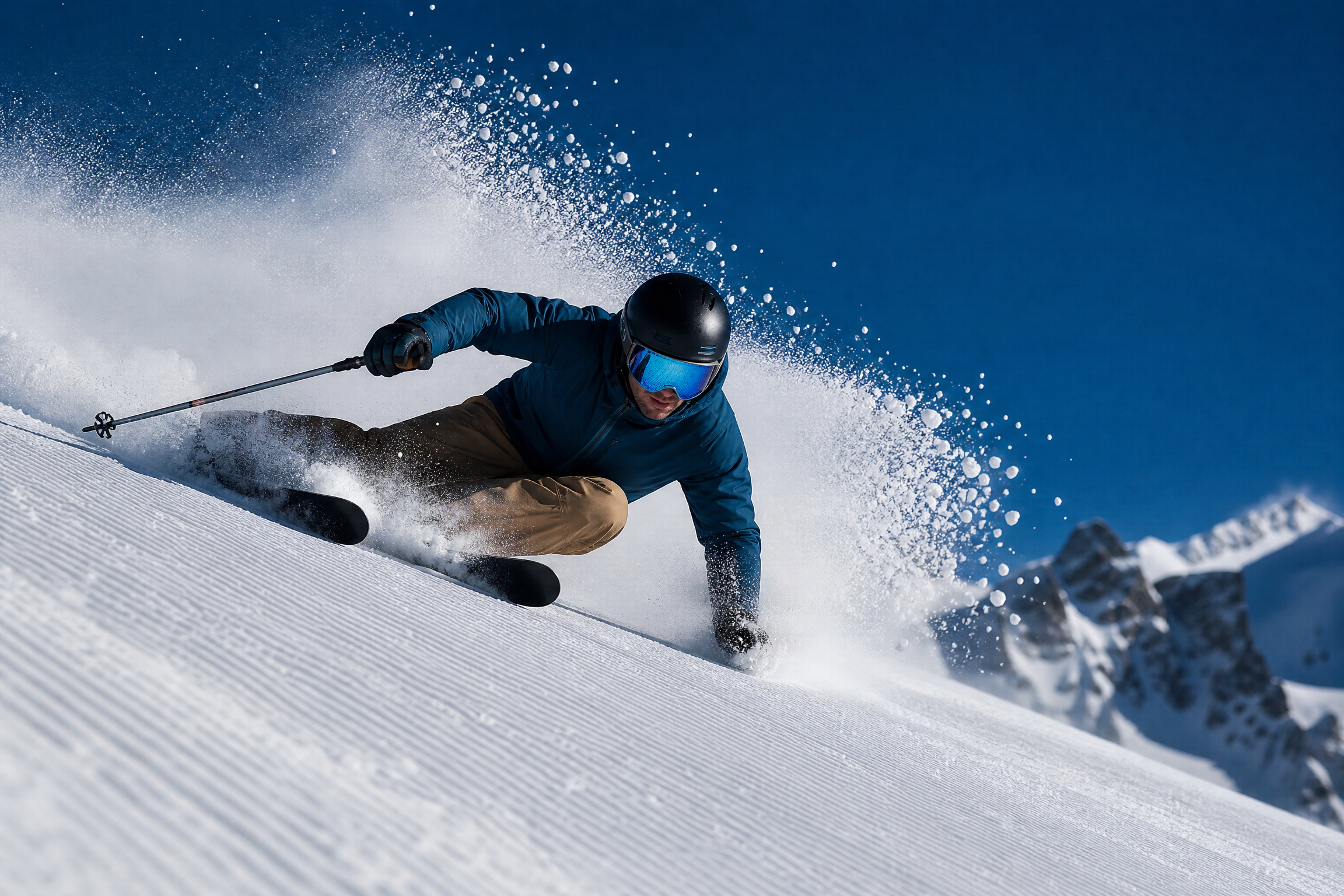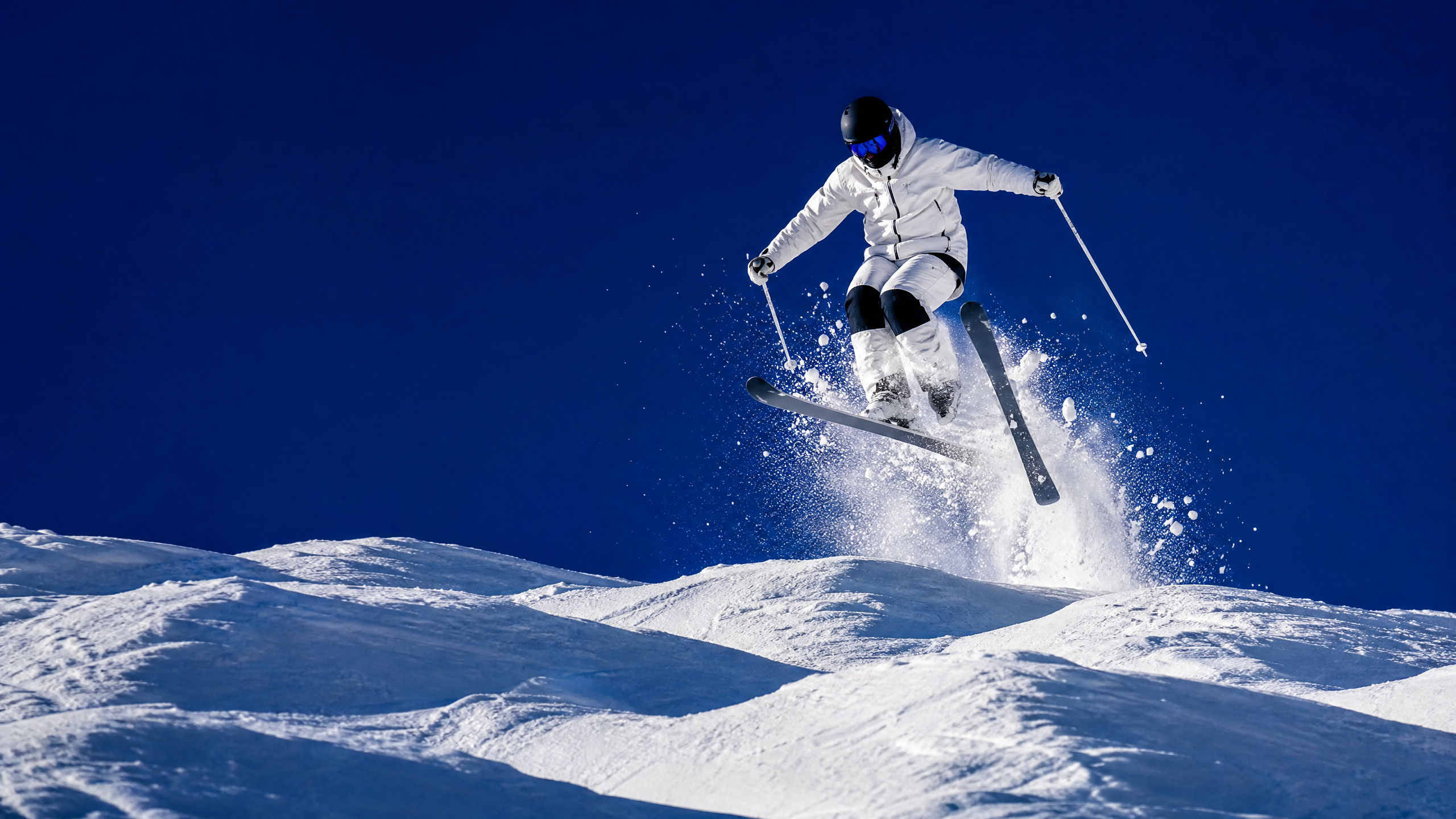
A bluebird day on a mogul field is one of the most physically demanding environments a human body can enter voluntarily.
The moguls are not obstacles. They are a rhythm — a cadence of explosive absorption and extension that repeats every 1.2 seconds from the top of the run to the bottom. Your quads are absorbing impact. Your core is rotating. Your arms are planting. Your legs are extending into the next turn before the current one is finished.
The phosphocreatine system is firing on every single mogul.
Alpine skiing — particularly moguls, steeps, and high-speed technical terrain — is one of the highest-demand sports for the ATP-phosphocreatine energy system. Each turn is a maximal or near-maximal effort lasting under two seconds. The recovery between turns is measured in fractions of a second. There is no aerobic recovery. There is only the next turn.
The athlete who is creatine optimized has a measurable advantage in this environment.
Phosphocreatine saturation means the ATP regenerates faster between turns. The legs don't load up with the same fatigue. The twentieth mogul feels more like the tenth. The run that used to end in a survival tuck ends with a controlled finish and the immediate desire to go back up.
CELL/T was built for this. Five grams of micronized creatine monohydrate. One gram of sodium. Two grams of taurine. Taken daily. Not on race day — every day. Because phosphocreatine saturation is a chronic state, not an acute one. You build it over weeks. You maintain it through the season. And on the bluebird day when the conditions are perfect and the mogul field is freshly groomed and the mountain is yours — you are ready.
You tear the sachet at the top of the lift. The cold air is so clean it almost hurts. The sky is the kind of blue that doesn't exist at sea level.
You drop in.
The first mogul hits. You absorb it. You extend. You plant.
The run begins.