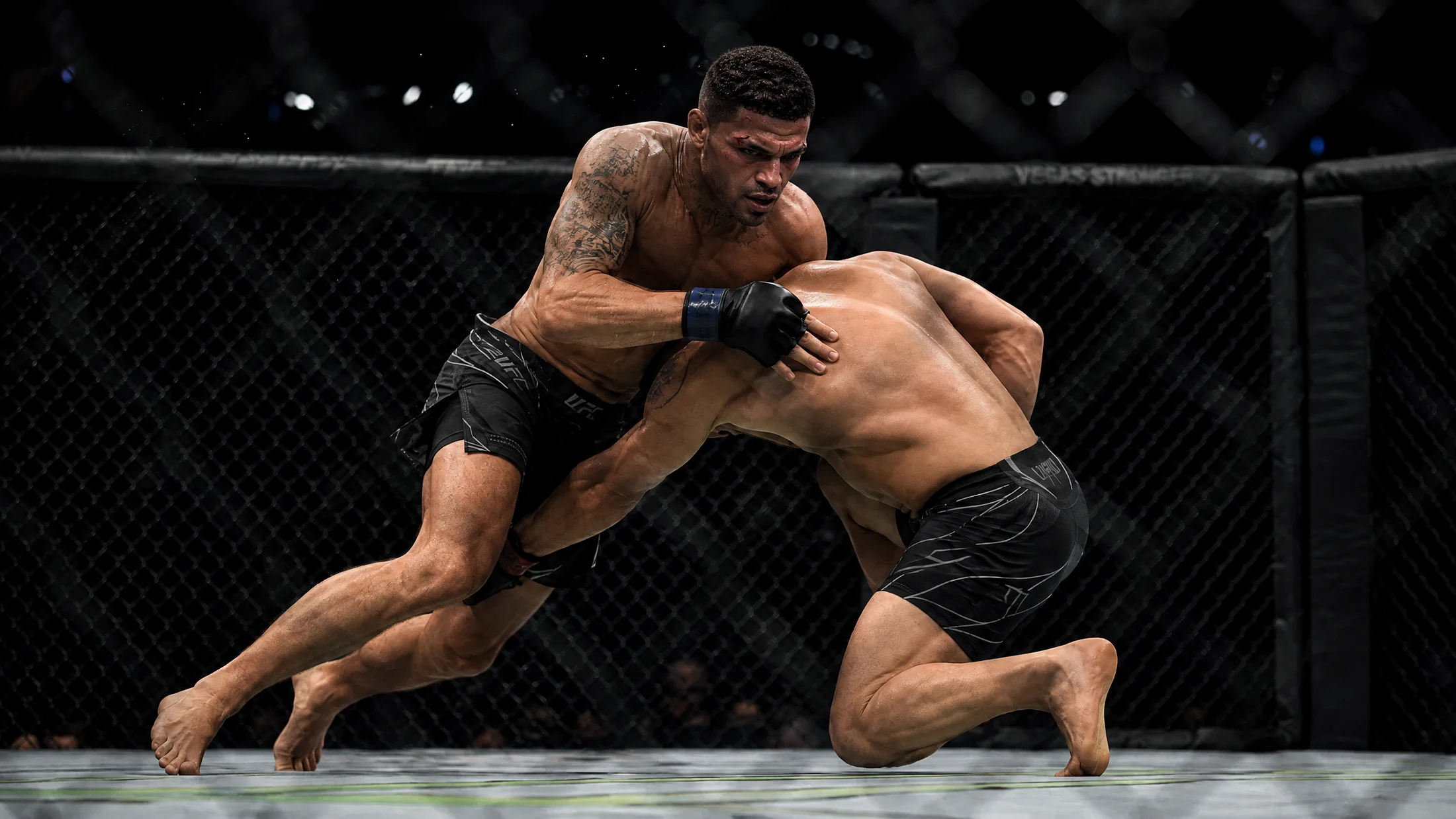
Three minutes on. One minute off.
That is the structure. What happens inside it is not structured at all. A takedown attempt. A scramble. A clinch against the cage. A ground-and-pound sequence. A submission escape that requires full-body explosive extension against a trained opponent who is trying to finish you. Then the bell. Sixty seconds. Then it starts again.
MMA is the most physiologically complete sport in existence.
No other athletic context demands the same simultaneous development of explosive power, aerobic endurance, anaerobic capacity, strength, flexibility, and the ability to perform all of these under conditions of physical damage and psychological stress. The fighter who is still sharp in round five has not just trained harder than their opponent. They have optimized something at the cellular level that most fighters never address.
That something is phosphocreatine.
Every explosive action in a fight — the takedown, the sprawl, the punch combination, the guard pass, the submission attempt — is powered primarily by the ATP-phosphocreatine system. These actions happen in under two seconds. The aerobic system cannot regenerate ATP fast enough. Glycolysis is too slow. Only phosphocreatine regenerates ATP at the rate that explosive combat demands.
Creatine is well studied for high-intensity work capacity, strength, and training adaptation. Those findings are relevant to combat-sport preparation, but they do not guarantee late-round power or a competitive outcome in a fight.
But the dimension most fighters miss is the cognitive one.
Fighting is a thinking sport. In controlled studies, creatine has improved selected cognitive measures under sleep deprivation or high mental demand. Those studies were not simulated fights, so the responsible conclusion is narrower: creatine participates in brain energy metabolism and deserves study under demanding conditions.
The brain runs on creatine. The phosphocreatine system is not just a muscle fuel — it is a neurological fuel. The creatine kinase enzyme that regenerates ATP in muscle cells is also present in brain tissue, and the brain's demand for rapid ATP regeneration during intense cognitive load mirrors the muscle's demand during explosive physical effort.
There is also the recovery dimension. In an eccentric-exercise study, creatine supplementation supported recovery of muscle force after induced muscle damage. That result is relevant to recovery research, but it is not proof of faster recovery from sparring, impact trauma, or an entire fight camp.
CELL/T delivers five grams of micronized creatine monohydrate with sodium, potassium, magnesium, and two grams of taurine. It supports the daily creatine and hydration routine behind camp. Coaching, sleep, nutrition, load management, and medical care still do the heavy lifting.
The corner puts the stool away. The ref calls you to the center.
Round five.
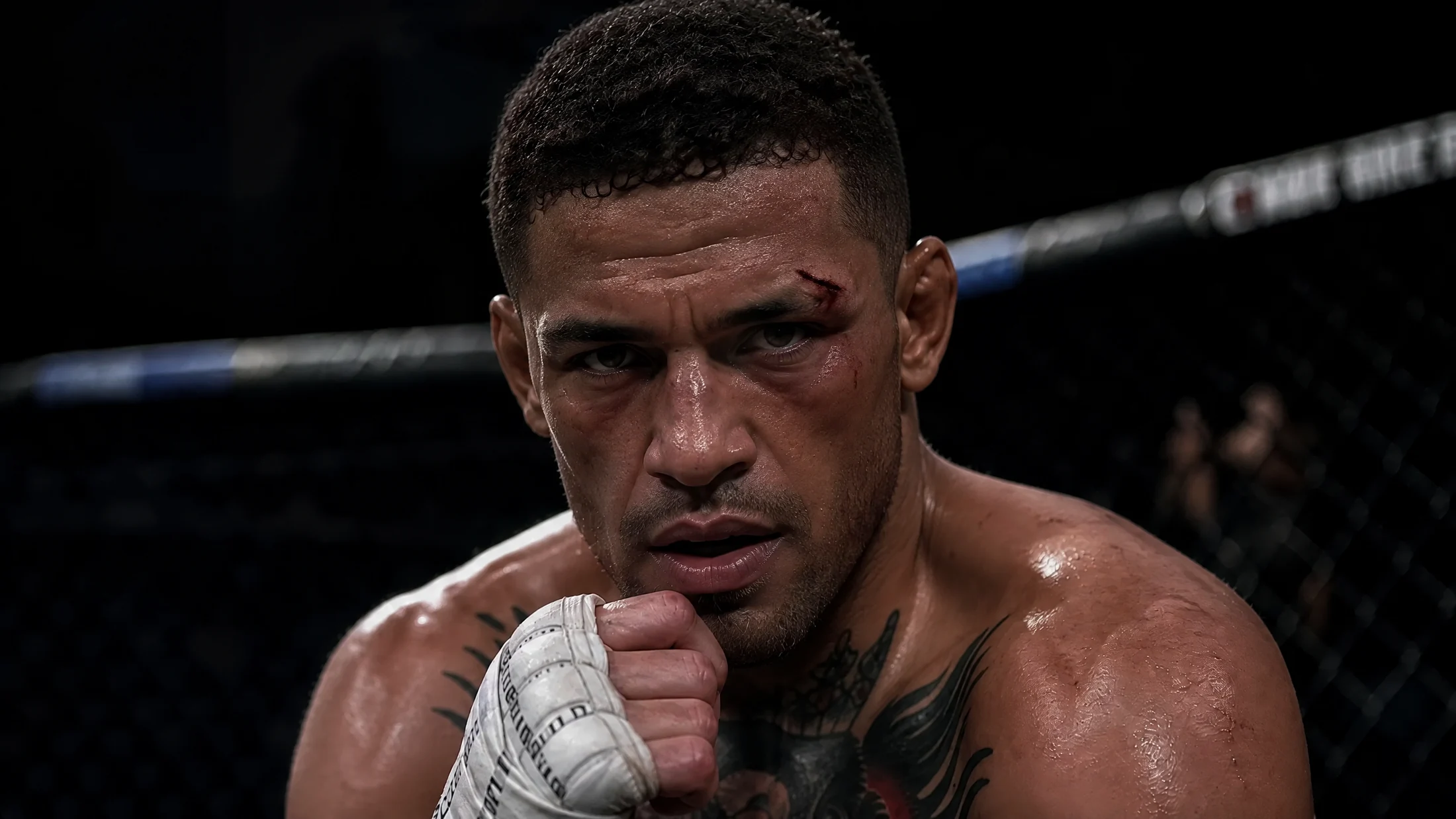
You're still here. You're still sharp.
That's not an accident.
References
- Rae C, Digney AL, McEwan SR, Bates TC. Oral creatine monohydrate supplementation improves brain performance: a double-blind, placebo-controlled, cross-over trial. Proc R Soc Lond B. 2003;270(1529):2147-2150. doi:10.1098/rspb.2003.2492
- McMorris T, Harris RC, Swain J, et al. Effect of creatine supplementation and sleep deprivation, with mild exercise, on cognitive and psychomotor performance, mood state, and plasma concentrations of catecholamines and cortisol. Psychopharmacology. 2006;185(1):93-103. doi:10.1007/s00213-005-0269-z
- Rawson ES, Volek JS. Effects of creatine supplementation and resistance training on muscle strength and weightlifting performance. J Strength Cond Res. 2003;17(4):822-831.
- Cooke MB, Rybalka E, Williams AD, Cribb PJ, Hayes A. Creatine supplementation enhances muscle force recovery after eccentrically-induced muscle damage in healthy individuals. J Int Soc Sports Nutr. 2009;6:13. doi:10.1186/1550-2783-6-13
- Kreider RB, Kalman DS, Antonio J, et al. International Society of Sports Nutrition position stand: safety and efficacy of creatine supplementation in exercise, sport, and medicine. J Int Soc Sports Nutr. 2017;14:18. doi:10.1186/s12970-017-0173-z