Mile sixty comes at 2 AM.
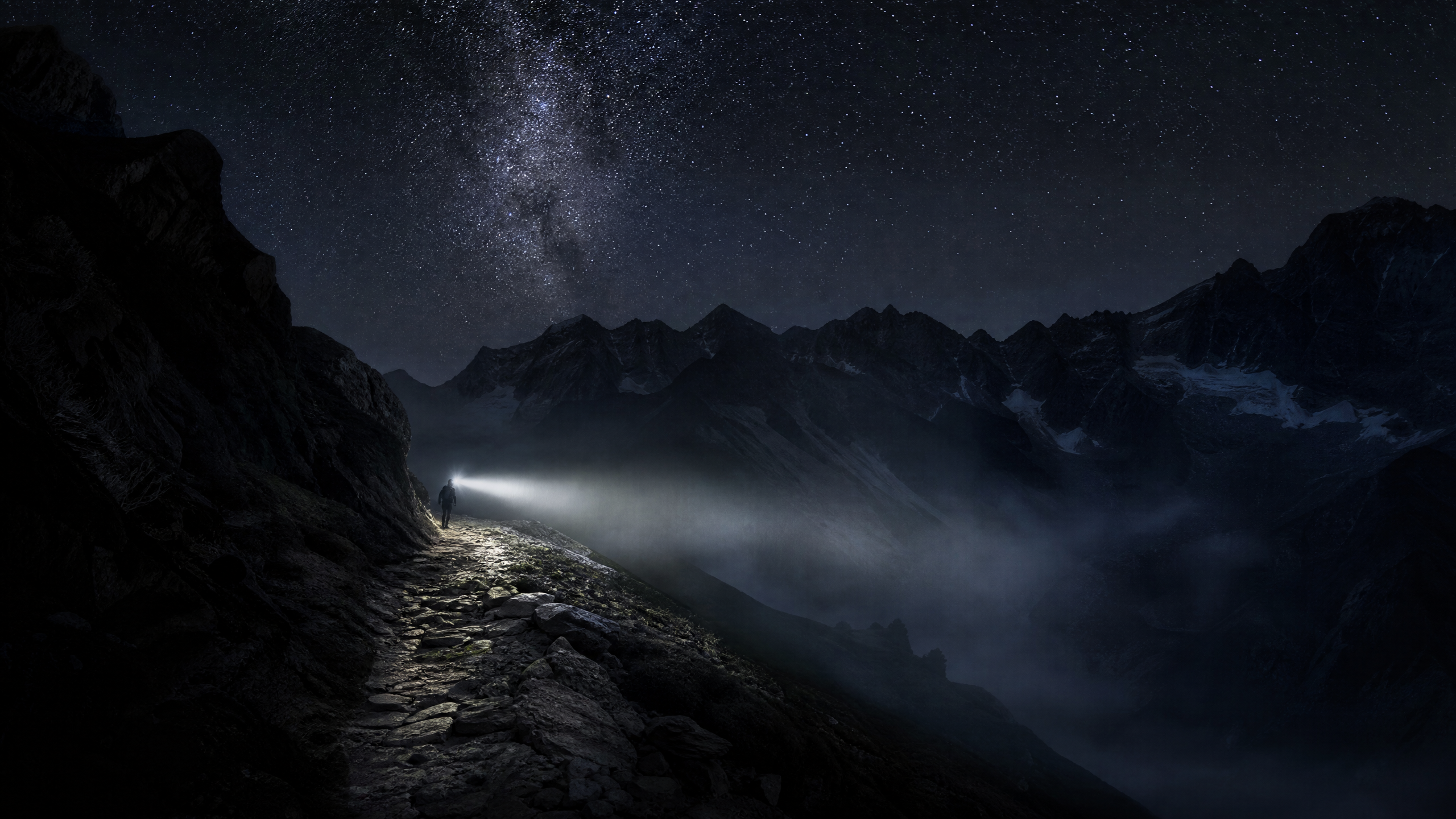
You know this because you planned it that way — the start time calculated so that the hardest section of the course, the one with the 4,000-foot climb and the exposed ridge, would hit when the temperature drops and the stars come out and the world becomes very simple. Just the beam of your headlamp. Just the next step. Just the sound of your breathing and the crunch of rock under your feet.
A hundred-mile race is not a running race. It is a negotiation with time.
You have been moving for seventeen hours. You will move for another fifteen. In that window, your body will cycle through every energy system it has — aerobic, glycolytic, phosphocreatine — dozens of times. Every technical descent, every steep climb, every moment you need to catch yourself on a loose rock is powered by fast-twitch muscle fibers running on phosphocreatine.
At mile sixty, those stores are not what they were at mile one.
This is where a consistent creatine habit may matter most. Not as a rescue at the aid station, but as part of the weeks of training that built the reserve before the start. Daily supplementation can raise muscle creatine and phosphocreatine stores; what any athlete feels at mile sixty still depends on training, fueling, sleep, terrain, and individual response.
It is not a guarantee of fresh legs. It is one more reserve built before the hard hours arrive.
But the dimension most ultra hikers miss is the cognitive one — and at 2 AM on a technical ridge, it may be the most important one.
Sleep deprivation is the defining physiological challenge of a hundred-mile event. By mile sixty, most athletes have been awake for twenty or more hours. The cognitive impairment that accumulates in that window — degraded decision-making, slower reaction time, impaired spatial awareness — is not just uncomfortable. On exposed terrain in the dark, it is dangerous.
In a controlled sleep-deprivation study, McMorris et al. observed improvements in selected cognitive and psychomotor measures after creatine supplementation. Rae et al. also reported cognitive-test benefits in a specific study population. Neither study proves that creatine will preserve judgment in every ultra athlete, but both support the broader role of creatine in brain energy under demanding conditions.
Watanabe et al. reported reduced mental fatigue during sustained cognitive tasks. The evidence is relevant, not absolute: technical safety still depends on sleep strategy, pacing, nutrition, preparation, and conservative decision-making. Creatine is support, not a substitute for any of them.
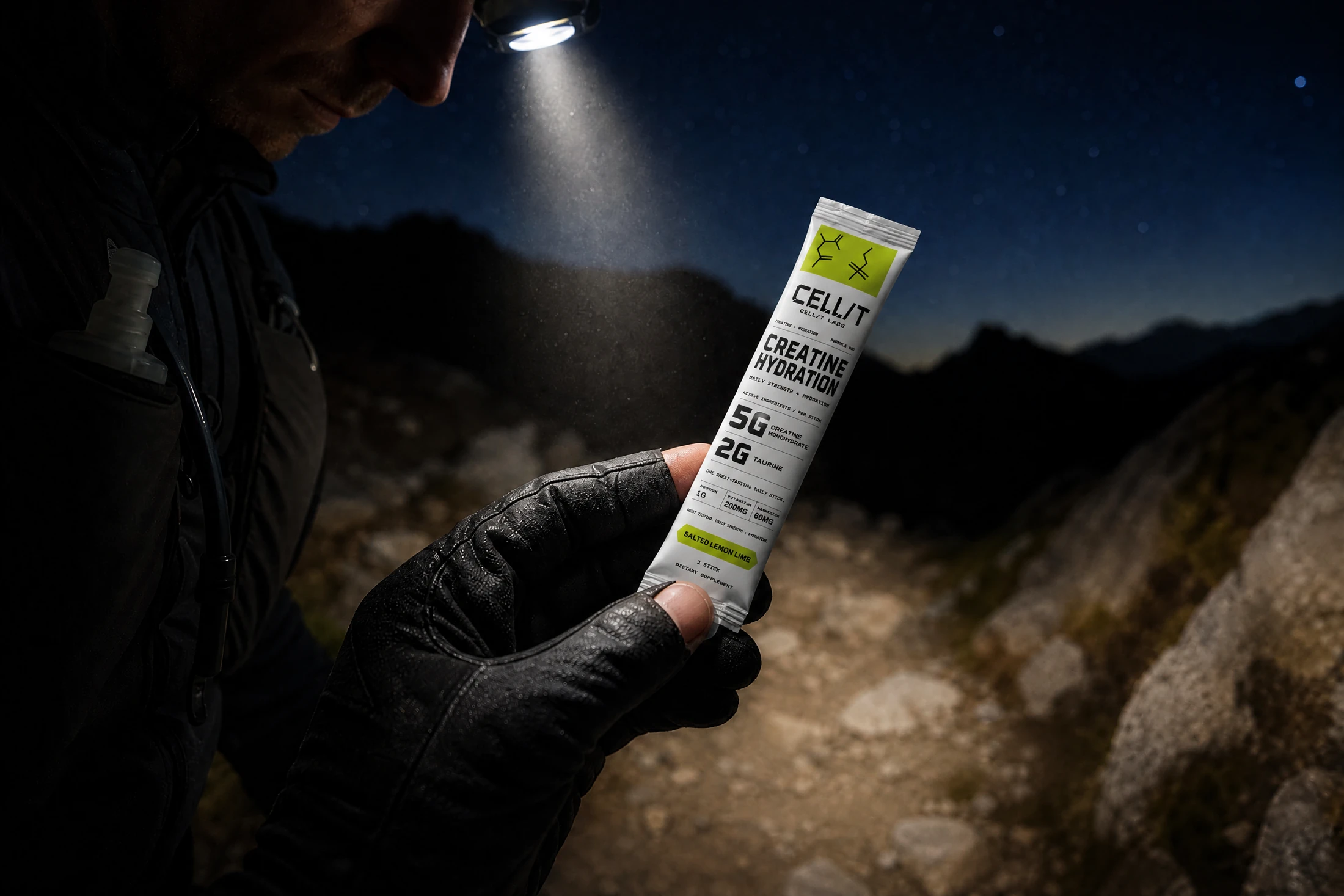
You reach into your vest at the aid station. The volunteers hand you broth and potatoes. You tear the CELL/T sachet into your water bottle — the Lemon Lime cuts through the fatigue taste that's been in your mouth for hours. Sharp. Clean. A signal to your body that the system is still being maintained.
The headlamp beam stretches ahead. The trail climbs.
You have been out here long enough to know that the mountain will not give you anything. Every foot of elevation is earned. Every mile after sixty is a choice.
You make the choice.
You keep moving.
References
- McMorris T, Harris RC, Swain J, et al. Effect of creatine supplementation and sleep deprivation, with mild exercise, on cognitive and psychomotor performance, mood state, and plasma concentrations of catecholamines and cortisol. Psychopharmacology. 2006;185(1):93-103. doi:10.1007/s00213-005-0269-z
- Rae C, Digney AL, McEwan SR, Bates TC. Oral creatine monohydrate supplementation improves brain performance: a double-blind, placebo-controlled, cross-over trial. Proc R Soc Lond B. 2003;270(1529):2147-2150. doi:10.1098/rspb.2003.2492
- Watanabe A, Kato N, Kato T. Effects of creatine on mental fatigue and cerebral hemoglobin oxygenation. Neurosci Res. 2002;42(4):279-285. doi:10.1016/S0168-0102(02)00007-X